East Haven Together is involved with the Resilience of Anthropocene Coasts and Communities (RACC) project, a collaborative project between several universities, government agencies, and communities. In March they welcomed academics from Queen Mary University London and Glasgow University who are studying the impact of pollutants entering the marine environment from eroding coastal landfill sites.
Our past industrialisation has left thousands of coastal landfill sites at risk of erosion and flooding, which will accelerate under climate change. This poses harm to coastal communities and habitats, as well as possible future risks.
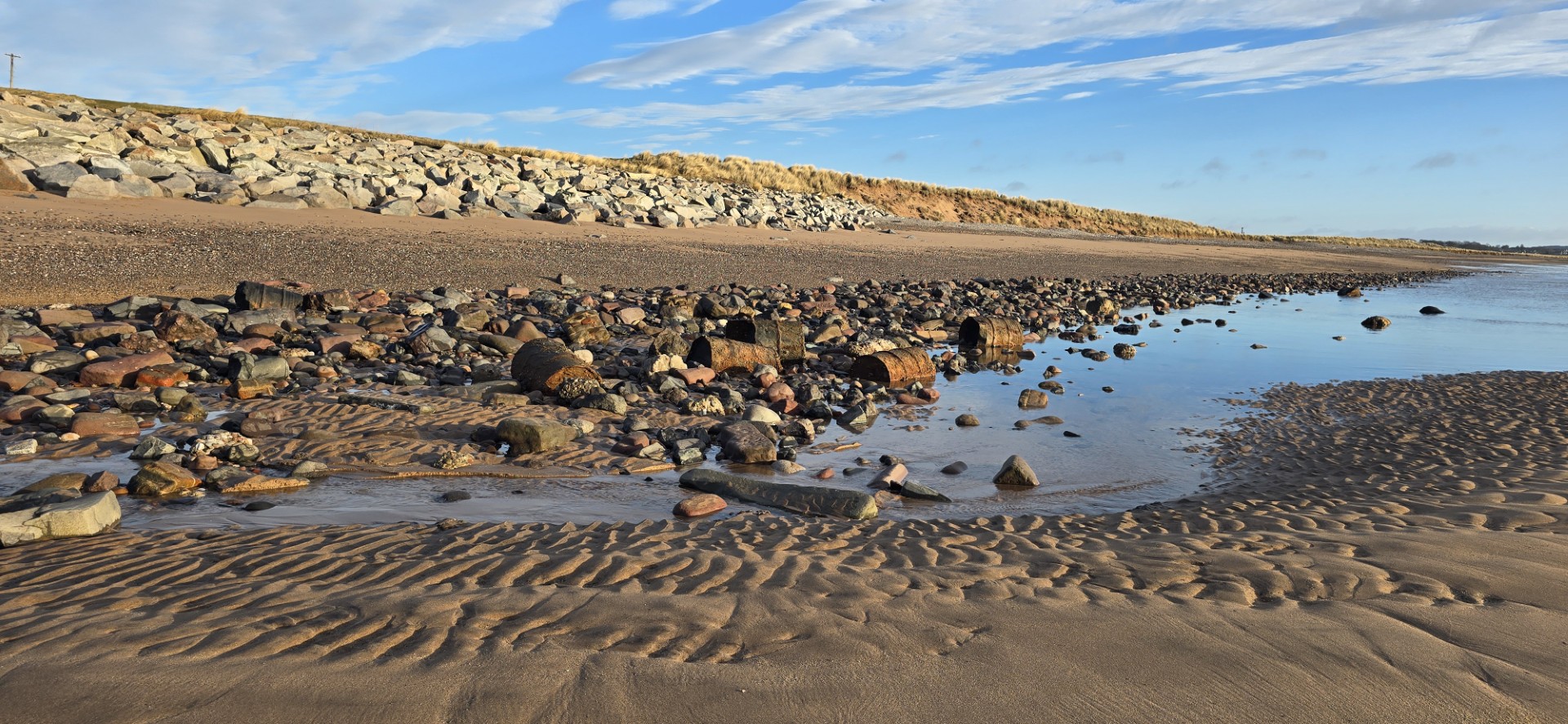
One such site at the Dowrie Works, near Elliot in Angus, is a significant cause of concern due to the type and volume of materials which have been escaping. This particularly worrying site was created sometime in the early 1900s when a Bitumen company decided it would build a large coastal defence system out of waste. It is the size of seven football pitches and extends over the top part of the beach where it is being eroded quickly by the power of the waves and rising sea levels.
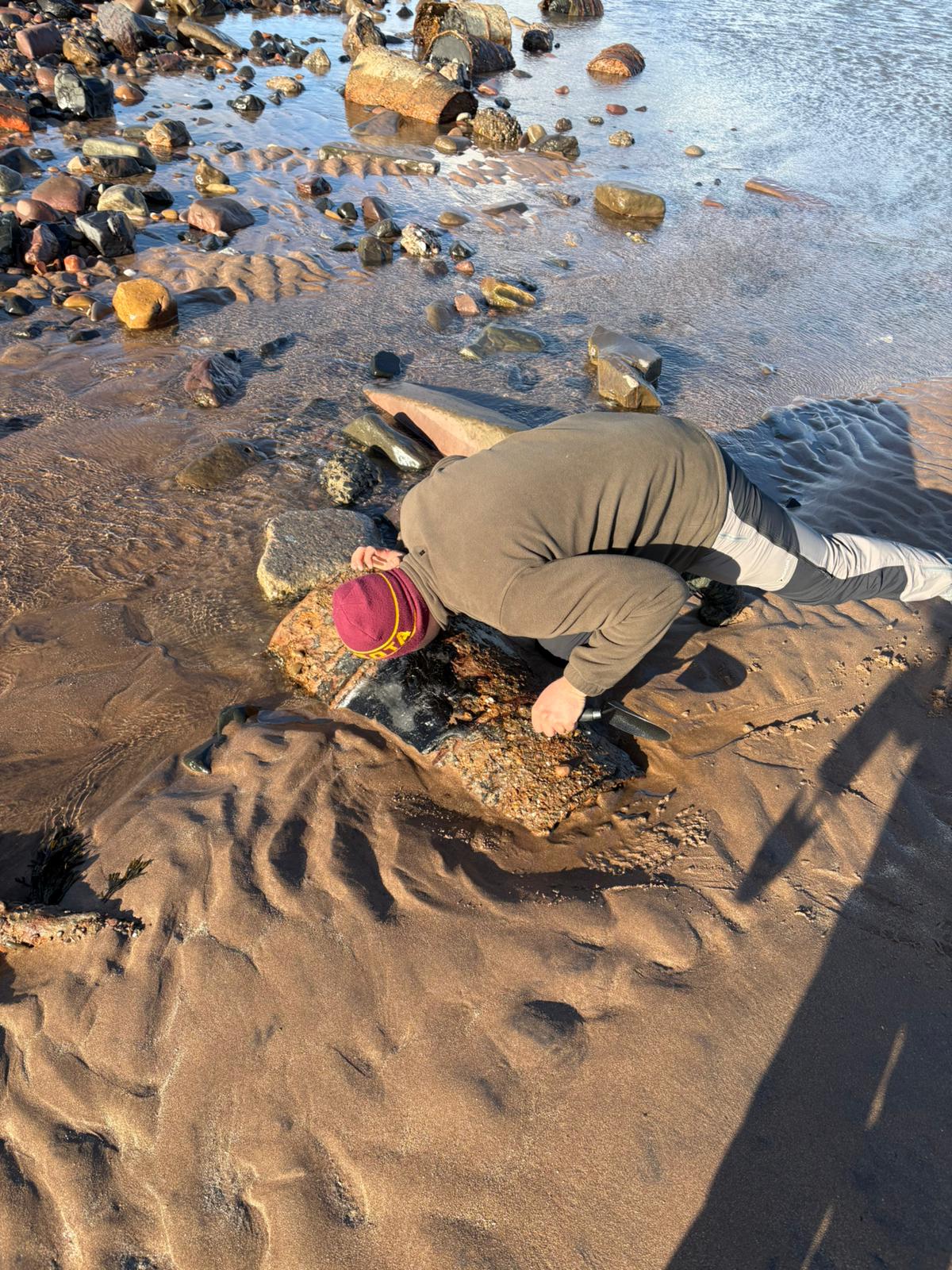
At the Dowrie works, academics carried out 16 solid hours of investigatory works which will play a vital role in understanding risks to the marine eco system and wider environment by producing evidence-based research that can help inform policy and future planning.
You can read more about this project and keep up to date on their website.